What Owning an In-Duct Air Purifier Is Actually Like: Bulbs, Capacitors and Install Timing
Most of owning an in-duct purifier is waiting for delivery and doing very little afterward.
October 17, 2026 · 4 min read
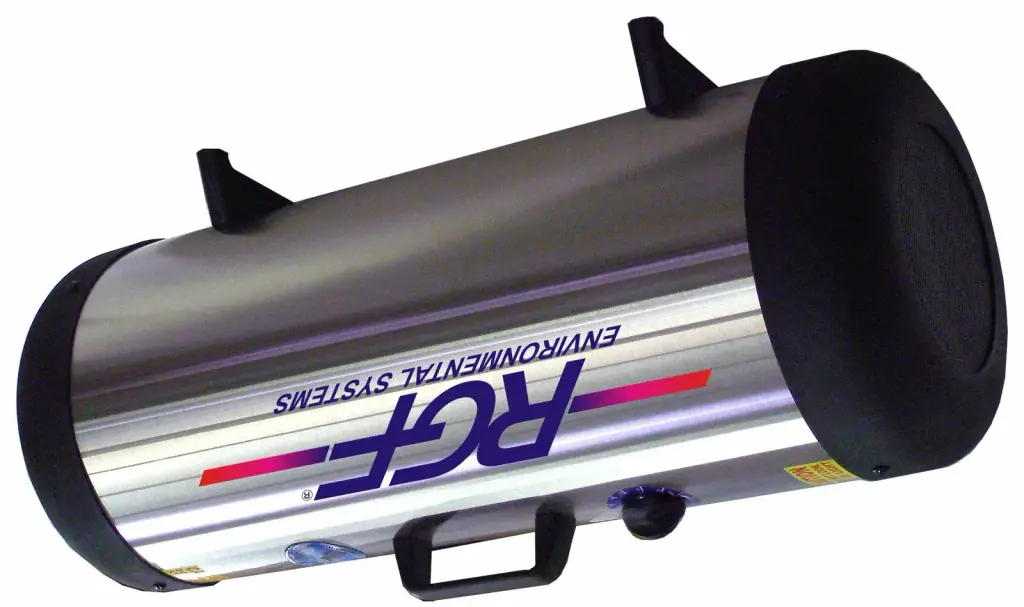
Before you sign off on equipment for your building, you want to know what it will ask of you afterward. For in-duct air purification from Clean Science Solutions, the short version is that most of the effort sits at the front: assessment, delivery and installation. After that, the company says very little maintenance is required. Here's the full picture, from the day you call to the day a bulb needs changing.
Step one: the assessment
Ownership starts before you buy anything. An engineer comes to your New York space, reviews the fan schedule that sets the number of units for your square footage, and looks at the HVAC structures to see what size unit fits and what installation work is required. You come away with a plan rather than a guess. The quote request form asks for your square footage, typical traffic, space use and fan schedule, and the company says it will get back to you within 24 hours.
Delivery: plan for two to four weeks
Clean Science Solutions says units are delivered in 2 to 4 weeks, depending on availability. If you have an event, a lease milestone or a certification date on the calendar, build that window into your plan rather than assuming next-week delivery. All of the products are manufactured by RGF Environmental Group in Riviera Beach, Florida, so the lead time reflects shipping from the manufacturer.
Installation: days, not months
Installation runs at about 3 to 4 units per day, and the company says a project takes anywhere from one day to a few weeks depending on how many units you're installing. As an illustration, a 12-unit job at 3 to 4 a day is roughly three to four working days of installation for a dedicated crew. Expedited installation is available at additional cost.
Who does the installing depends on the package you choose. With Basic, your team installs with consulting support. With Professional, the company marks the locations in your HVAC and your team places the units. With Premium, the installation is complete and end-to-end, including the electrical set-up. In-HVAC units are placed on the supply side, near the source, to treat fresh inlet air.
Day to day: very little
Once units are in, what do you actually do? Per the company, little is required. The unit sits in the duct, draws about 12 watts, and does its job in the background. There's no filter cartridge to swap on a monthly schedule and no consumable to reorder every quarter. The most useful thing for a facilities team to do is write the install dates somewhere visible, because the next item on the list is tied to the calendar.
The bulb: roughly every 36 months
The part that wears is the bulb. The company puts a typical bulb at about 36 months when it runs continuously. Thirty-six months of nonstop operation is roughly 26,000 hours, which is a long time for a lamp that never gets a night off. Put the replacement on the same maintenance calendar you use for other long-interval items, and it stops being a surprise.
If your units don't run continuously, the interval will stretch, but the company's published figure is the continuous-operation number, so use that for planning and adjust only once you have your own history.
The capacitor: occasional, and covered during warranty
The other item the company names is a capacitor. A capacitor is a small electrical component that helps a unit's circuitry run, and like any electronic part it can eventually need replacing. Clean Science Solutions describes this as occasional. For anything broken or damaged during the warranty window, the company says it replaces the products. Ask for the exact warranty length and terms in writing when you get your quote, since they aren't published on the site.
A simple ownership checklist
- Before purchase: complete the assessment so unit count and placement are set by an engineer.
- At order: confirm delivery timing, remembering the 2 to 4 week range depends on availability.
- At installation: choose Basic, Professional or Premium to match your team's capacity.
- After installation: record the date, and plan for a bulb change at about 36 months of continuous running.
- Ongoing: keep an eye out for any unit that stops working, and use the warranty for broken or damaged products.
- Annually: ask your building engineer to confirm the units are still powered and in place.
What it costs to own, in plain terms
On price, the company says each product is less than $.20 a square foot, with installation packages and service options available to suit your needs. It doesn't publish a service price list, so the cost of bulb or capacitor replacement outside warranty is something to ask about at quoting. Energy is the one running cost you can estimate yourself: twelve watts per unit, about the same as a refrigerator bulb.
If you'd like to talk through delivery, installation and service for your own New York building, request an assessment through the quote form or call Clean Science Solutions at (917) 407-5822, available 24 hours a day.
Clean Science Solutions, (917) 407-5822
Call (917) 407-5822More articles
What a Fan Schedule Tells an Engineer About How Many Purifier Units Your Space Needs
Square footage tells you how big a space is; the fan schedule tells you how the air actually moves through it.
Basic, Professional or Premium: Which Installation Package Fits Your Building
The units are the same; the difference is how much of the installation your own people take on.