Twelve Watts and a Tight Envelope: Purifying Air in Energy-Efficient New York Buildings
A well-sealed building saves energy and holds on to whatever is inside it, so the air deserves its own plan.
October 17, 2026 · 4 min read
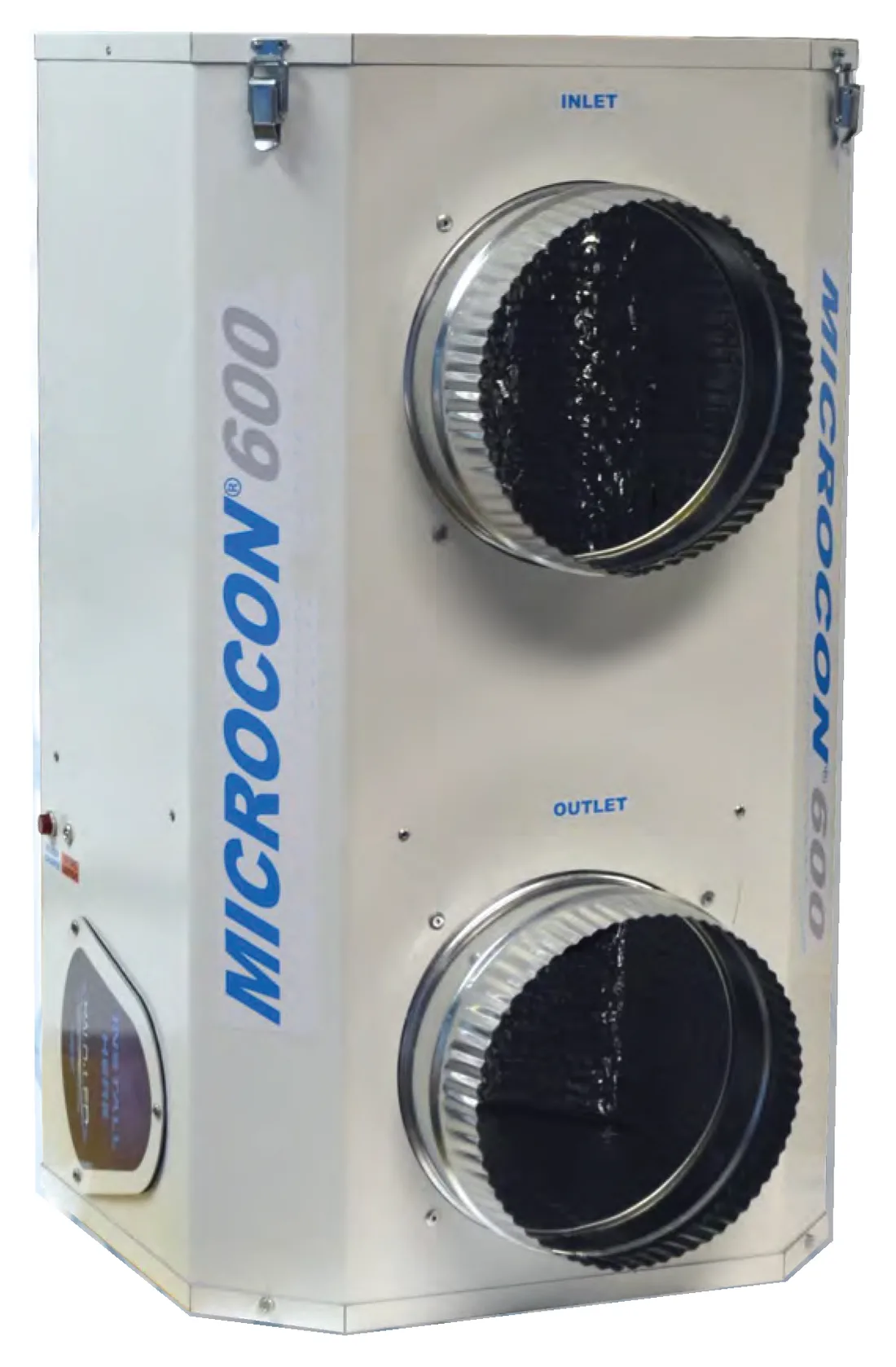
New York's newer and renovated buildings are built tight on purpose. Better windows, sealed envelopes and controlled ventilation cut heating and cooling bills. The same tightness also means less random air leaking in and out, and that changes how indoor air behaves. If you manage or own a building like that, purification isn't a luxury add-on. It's part of the same conversation as energy.
Why sealed buildings hold on to air
In an older building, drafts did some of the work of ventilation by accident. Air slipped through gaps around windows and doors, and whatever was in the room traded places with outdoor air. A modern sealed building has fewer of those gaps, so the air you have is largely the air your mechanical system moves. Cooking smells, off-gassing from carpet and furniture, cleaning products and everyone's breathing stay in the circulation loop until something removes them.
That's why the mechanical system matters so much, and why a purifier in the duct is a natural fit. The air handler already moves the building's air. Treatment inside the duct works on that air as it travels, without asking anyone to open a window in January.
The energy question comes first
The obvious worry for an efficiency-minded owner is what a purifier adds to the electric bill. Clean Science Solutions answers that directly: its products use very little energy, about 12 watts, which the company compares to the light bulb in your refrigerator.
Here's a bit of arithmetic to make that concrete. Twelve watts running around the clock for a full year comes to about 105 kilowatt hours per unit. Your own electric rate turns that into dollars, so we won't guess at one. The point is the scale: it's a small, steady load, not a new piece of heavy equipment on the mechanical schedule.
There's a general contrast worth knowing. Some approaches to cleaner air rely on denser filters, which make fans work harder to push air through. That can raise fan energy use and it's a real design tradeoff. A unit that treats air in the duct without adding that same kind of resistance addresses a different part of the problem. It doesn't replace your filters, and the engineer will look at both during the assessment.
Where LEED comes in
LEED certification includes attention to indoor air quality, and according to Clean Science Solutions, tightly sealed efficient buildings can use its products to help reach the target indoor air quality standards that random-sample tests check for. In other words, if your building is pursuing or maintaining certification and the air results are borderline, treatment inside the system is one tool to bring those numbers where they need to be.
Two honest caveats. First, a purifier doesn't by itself certify a building, since certification depends on your project's whole set of requirements. Second, the testing is done on the air in your actual spaces, so your own results are what count. Your LEED consultant is the right person to say what your project needs. Clean Science Solutions is the right call for what in-duct treatment can contribute.
A New York building that did its homework
The Clean Science Solutions products page tells one story that fits this topic. Fisher Brothers, a New York City real estate company, ran an 18-month study testing PHI-Cell units in its own 50-story, 2 million square foot building. According to the company, Fisher Brothers found the results compelling enough that it installed PHI throughout its entire portfolio. The press materials on the company's news page quote Fisher Brothers describing an extensive 18-month due diligence process. Whatever your building's size, that's a useful model: test carefully, then decide.
What to ask when you evaluate air treatment for a tight building
- What is the wattage per unit, and how many units does my square footage and fan schedule require?
- Does it work alongside my existing filters, or does it ask me to change them?
- Where in the duct will it sit, and how does that relate to my outside air intake?
- What is the maintenance plan, and how often are parts replaced?
- What does the supplier say about third-party testing, and can I read the documentation?
- How would this help with the indoor air quality testing my certification involves?
Cost, scale and placement
On cost, the company states that each product is less than $.20 a square foot, with installation packages and service options on top. On scale, it says it can serve single offices, entire floors and even an entire skyscraper, in commercial and residential settings. On placement, in-HVAC units go on the supply side near the source to treat fresh inlet air, which suits a building where the mechanical system is already managing the air closely.
If you're planning or running an energy-efficient building in New York and want to see how treatment inside the duct would fit, ask Clean Science Solutions for an assessment through the quote form, or call (917) 407-5822 any time of day.
Clean Science Solutions, (917) 407-5822
Call (917) 407-5822More articles
What a Fan Schedule Tells an Engineer About How Many Purifier Units Your Space Needs
Square footage tells you how big a space is; the fan schedule tells you how the air actually moves through it.
Basic, Professional or Premium: Which Installation Package Fits Your Building
The units are the same; the difference is how much of the installation your own people take on.